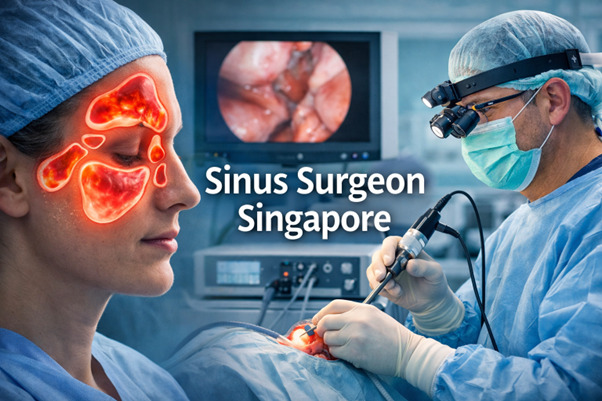
Introduction: Understanding When Sinus Surgery May Be Necessary
Sinus conditions are common, but not all cases require surgery. Many patients experience nasal congestion, facial pressure, headaches, or recurring infections that can often be managed with medication and lifestyle adjustments. However, if symptoms continue or complications develop, it is important to see a sinus specialist to assess whether surgery may be required.
This article explores the key sinus conditions that may require surgical treatment, with a focus on safe, evidence‑based decision‑making.
Understanding Sinus Disease

What Are the Sinuses?
The sinuses are air‑filled cavities located within the bones of the face and skull. They are lined with mucous membranes and are connected to the nasal cavity through narrow drainage pathways. Healthy sinuses rely on proper airflow and mucus clearance to function effectively.
When these drainage pathways become blocked or inflamed, mucus can accumulate. This creates an environment where infection and chronic inflammation may develop.
Types of Sinusitis
Sinusitis is broadly classified based on symptom duration and pattern. Acute sinusitis typically lasts less than four weeks, while subacute sinusitis may persist for up to three months. Chronic sinusitis is diagnosed when symptoms last longer than 12 weeks despite appropriate medical treatment.
Recurrent acute sinusitis refers to multiple episodes of acute infection within a year, with complete resolution between episodes. Each category has different implications for management and potential surgical considerations.
When Is Sinus Surgery Considered?
Sinus surgery is never the first step in managing sinus disease. Most patients improve with medication such as nasal sprays, saline irrigation, antibiotics when indicated, and control of underlying triggers like allergies.
Surgical treatment is considered when symptoms persist despite adequate medical therapy, when anatomical blockages prevent proper drainage, or when complications threaten surrounding structures. The goal of surgery is to improve ventilation and drainage, not simply to remove tissue.
Conditions That May Require Surgical Treatment
Chronic Sinusitis
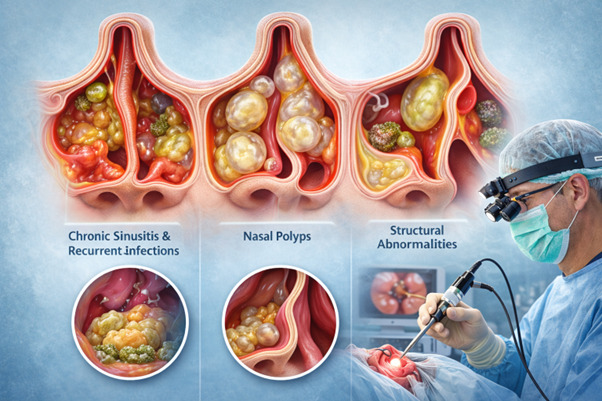
Chronic sinusitis is one of the most common reasons patients are referred to a sinus surgeon in Singapore. Ongoing inflammation causes persistent nasal blockage, facial pressure, post‑nasal drip, and a reduced sense of smell.
When medical treatment fails to control symptoms, surgery may be recommended to open blocked sinus pathways and allow topical medications to work more effectively.
Recurrent Sinus Infections
Some patients experience repeated sinus infections throughout the year, even after appropriate treatment. These recurring episodes can significantly affect work, sleep, and overall quality of life.
Surgery may be considered when imaging shows poor sinus drainage or structural narrowing that predisposes the patient to repeated infections.
Nasal Polyps
Nasal polyps are soft, non‑cancerous growths arising from chronically inflamed nasal or sinus lining. They can obstruct airflow and block sinus drainage, leading to persistent congestion and infection.
When polyps are extensive or recur despite medication, surgical removal may be necessary to restore nasal breathing and reduce infection risk.
Structural Abnormalities Affecting Sinus Drainage
Certain anatomical variations can impair sinus ventilation. These include a deviated nasal septum, enlarged turbinates, or air‑filled structures that narrow sinus openings.
Surgery aims to correct these structural issues to improve airflow and reduce the likelihood of mucus retention and infection.
Fungal or Atypical Sinus Disease
In some cases, sinus disease is caused by fungal involvement or unusual inflammatory patterns. These conditions often do not respond well to standard medication alone.
Surgical removal of diseased tissue is usually required to clear infection, obtain accurate diagnosis, and prevent further complications.
Complicated Sinus Infections
Severe sinus infections can occasionally spread beyond the sinuses to nearby areas such as the eyes or skull base. These situations require urgent specialist management.
Surgery may be necessary to drain infected sinuses and reduce pressure on surrounding structures.
Persistent Disease After Previous Surgery
Some patients continue to experience symptoms even after earlier sinus procedures. This may be due to scar tissue, incomplete drainage, or progression of disease.
Revision surgery may be recommended following careful reassessment and imaging to address remaining areas of obstruction.
Common Surgical Procedures Used in Sinus Treatment
Functional Endoscopic Sinus Surgery (FESS)
FESS is the most widely used technique for treating chronic and recurrent sinus disease. It is performed using endoscopes inserted through the nostrils, avoiding external incisions.
The procedure focuses on enlarging natural sinus openings to restore ventilation while preserving healthy tissue.
Balloon‑Based Sinus Procedures
Balloon dilation is a minimally invasive option suitable for selected patients with isolated sinus blockage. A small balloon is used to widen narrowed drainage pathways.
This approach may be recommended for specific sinus patterns rather than widespread disease.
Polyp Removal and Targeted Tissue Clearance
In cases involving nasal polyps or inflamed tissue, targeted removal is performed to relieve obstruction. Care is taken to minimise trauma to surrounding structures.
This allows better delivery of long‑term medical treatment after surgery.
Diagnostic and Pre‑Operative Assessment
Clinical Evaluation
A detailed history and physical examination are essential before considering surgery. Symptoms, frequency of infections, response to medication, and impact on daily life are carefully assessed.
Nasal endoscopy allows direct visualisation of inflammation, polyps, or discharge within the nasal cavity.
Imaging Studies
CT scans of the sinuses provide detailed information about anatomy and disease extent. These images guide surgical planning and help identify structural contributors to symptoms.
Imaging is typically performed after medical treatment to ensure surgery is truly necessary.
Benefits and Risks of Sinus Surgery
Expected Benefits
The primary benefit of surgery is improved sinus drainage and airflow. Many patients experience fewer infections, reduced facial pressure, and better nasal breathing.
Surgery also enhances the effectiveness of long‑term medical therapy by improving access to the sinuses.
Potential Risks
As with any procedure, sinus surgery carries risks, though serious complications are uncommon when performed by experienced surgeons. Possible risks include bleeding, infection, and temporary changes in smell.
Careful surgical technique and proper post‑operative care help minimise these risks.
Recovery and Long‑Term Care
Post‑Operative Healing
Most patients recover gradually over several weeks. Nasal congestion and mild discomfort are common in the early phase and improve with time.
Regular follow‑up visits are important to monitor healing and clear crusting if needed.
Ongoing Management
Sinus surgery is part of a long‑term management plan rather than a standalone cure. Continued use of nasal sprays, saline rinses, and allergy control is often necessary.
This approach helps maintain surgical results and reduce recurrence.
Choosing the Right Specialist
Selecting an ENT surgeon with experience in sinus disease is essential. A thorough diagnostic process, clear explanation of options, and personalised treatment planning are key factors in achieving good outcomes.
Patients considering sinus surgery in Singapore should feel confident that surgery is recommended only when clearly indicated and supported by clinical findings.
Conclusion
Sinus surgery plays an important role in managing selected sinus conditions that do not respond to medical treatment alone. Chronic inflammation, recurrent infections, structural blockage, and complicated disease are among the situations where surgery may be beneficial.
With careful evaluation, appropriate surgical techniques, and long‑term follow‑up, many patients achieve meaningful relief and improved quality of life.