
Finding the Best Sinus Doctor in Singapore: Surgeon vs Specialist Explained
If you’ve been living with a blocked nose, facial pressure, post-nasal drip or endless “sinus infections”, you’ve probably started Googling phrases like “sinus surgeon Singapore”, “sinus specialist Singapore”, or “sinus doctor Singapore”.
Very quickly, you’ll see a mix of titles – ENT specialist, sinus surgeon, rhinologist, endoscopic sinus surgeon – and it’s not always clear who you actually need.
This guide breaks things down in simple, practical terms so you can understand the difference, know when surgery might be on the table, and choose the right sinus doctor in Singapore for your situation.
1. First Things First: What Exactly Is a Sinus Doctor?
In Singapore, most people who call themselves a sinus doctor, sinus specialist or sinus surgeon are actually ENT specialists (also called otolaryngologists). ENT specialists are medically and surgically trained doctors who diagnose and treat conditions of the ear, nose, throat, head and neck.
Because the sinuses sit around and behind the nose, sinus disease is a core part of ENT training. Many ENT specialists then go further and sub-specialise in rhinology (nose and sinus disorders) and endoscopic sinus surgery.
So, when you see:
- Sinus doctor Singapore – usually a general term for an ENT specialist who manages sinus problems.
- Sinus specialist Singapore – an ENT specialist with a particular interest and experience in sinus and nasal conditions.
- Sinus surgeon Singapore – an ENT specialist who not only treats sinus disease but also regularly performs sinus surgery such as Functional Endoscopic Sinus Surgery (FESS).
In many clinics, the sinus specialist and sinus surgeon are actually the same doctor, but the terminology used in marketing and websites can differ.
2. Common Sinus Problems These Doctors Treat
A sinus doctor in Singapore typically manages conditions such as:
- Chronic rhinosinusitis (persistent sinus inflammation lasting more than 12 weeks)
- Recurrent “sinus infections”
- Nasal allergies contribute to a blocked nose and sinus pressure
- Nasal polyps
- Deviated nasal septum with breathing issues
- Fungal sinus disease or complex sinus disorders
Symptoms that suggest it’s time to see a sinus specialist in Singapore include:
- Blocked nose and facial pressure lasting more than a few weeks
- Thick nasal discharge or post-nasal drip that isn’t improving
- Reduced or lost sense of smell
- Frequent “sinus headaches”
- Repeated courses of antibiotics with only short-term relief
- Snoring or sleep disruption related to a blocked nose
ENT (otolaryngology) specialists are specifically trained to manage these conditions, both medically and surgically.

3. What Does a Sinus Specialist in Singapore Actually Do?
A sinus specialist focuses on diagnosing and medically managing sinus disease before jumping to surgery. A typical consultation may include:
3.1 Detailed Assessment
- Symptom history and previous treatments
- Triggers (allergies, environment, infections, work or air-conditioning exposure)
- Review of prior scans or reports
3.2 Nasal Endoscopy
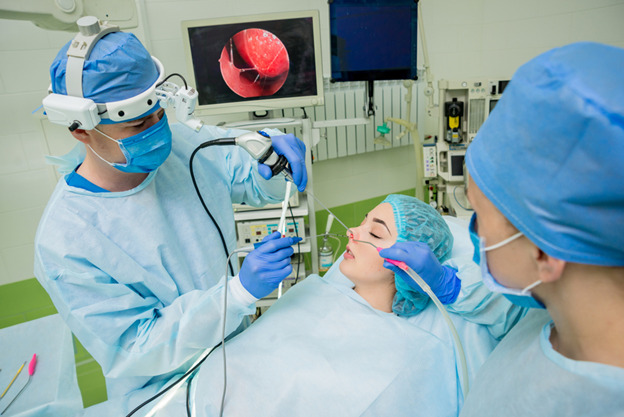
Most sinus specialists will perform a nasal endoscopy (also called nasendoscopy): a thin, flexible or rigid scope with a light and camera is gently passed into the nose to visualise the nasal cavity and sinus openings. This helps identify structural problems, inflammation, polyps or infection.
3.3 Medical Treatment First
Before considering a sinus surgeon, most patients will go through optimised medical therapy, which can include:
- Nasal saline rinses or sprays
- Topical steroid sprays or irrigations
- Antihistamines or allergy control
- Short courses of oral steroids (if appropriate)
- Antibiotics, if there is a bacterial infection
- Lifestyle or environmental modifications
For many people, especially those with mild to moderate disease, a sinus specialist can control symptoms without surgery.
4. What Does a Sinus Surgeon in Singapore Do?
A sinus surgeon is usually the same ENT/sinus specialist, but now wearing their surgical hat. They come in when:
- Your symptoms persist despite well-conducted medical therapy
- CT scans show significant sinus blockage, polyps, or complicated disease
- There are complications such as eye or skull-base involvement
- There is an associated structural problem, like marked septal deviation or narrow sinus drainage pathways
4.1 Functional Endoscopic Sinus Surgery (FESS)
The most common operation performed by a sinus surgeon in Singapore is Functional Endoscopic Sinus Surgery (FESS). This minimally invasive procedure uses tiny cameras and instruments passed through the nostrils (no external cuts) to:
- Remove diseased tissue or polyps
- Open up blocked sinus drainage pathways
- Restore normal ventilation and drainage of the sinuses
FESS aims to improve symptoms like chronic blockage, facial pressure and recurrent infections. It also helps topical medications reach the sinus cavities more effectively afterwards.
4.2 Benefits and Risks – In Brief
Most studies show that FESS significantly improves quality of life for a majority of patients with chronic rhinosinusitis, with reported success rates around 80–90% in adults.
However, like any surgery, there are risks, even if they are uncommon. These can include bleeding, infection, cerebrospinal fluid leak, and, very rarely, damage to the eye or surrounding structures because the sinuses sit close to the eyes and brain.
A good sinus surgeon will explain these risks clearly, talk through alternatives, and make sure surgery is genuinely warranted.
5. Sinus Surgeon vs Sinus Specialist: What’s the Real Difference?
In practice, the difference is more about emphasis and expertise than about two completely separate professions:
- A sinus specialist Singapore:
- Focuses on diagnosis and medical management.
- Has a deep understanding of sinus anatomy, allergy, and inflammation.
- May also perform surgery, but their initial role is often to explore non-surgical options.
- Focuses on diagnosis and medical management.
- A sinus surgeon Singapore:
- Is an ENT/sinus specialist who regularly performs sinus surgery, especially FESS and related procedures.
- Often has subspecialty fellowship training in rhinology or sinus and skull-base surgery.
- Is the person you want if your condition is complex or clearly surgical from the outset?
- Is an ENT/sinus specialist who regularly performs sinus surgery, especially FESS and related procedures.
In Singapore, many MOH-accredited ENT surgeons list sinus and nasal disease as a special interest, reflecting advanced training and experience in this area.
For most patients, you do not need to decide at the start whether you need a “surgeon” or a “specialist” – you simply need a qualified sinus doctor Singapore who can assess you and then guide you down the most appropriate path.
6. When Should You See a Sinus Doctor in Singapore?
See your GP or family doctor first for mild, short-lived sinus symptoms. But it’s wise to book an appointment with a sinus specialist if you notice:
- Symptoms lasting more than 12 weeks (chronic rhinosinusitis)
- Four or more sinus “infections” per year
- Persistent congestion on one side of the nose
- Facial pain, pressure, or headaches centred around the cheeks, forehead or between the eyes
- Thick, coloured nasal discharge or constant post-nasal drip
- Loss or change in your sense of smell
- Snoring or sleep problems linked with nasal obstruction
Otolaryngologists (ENT doctors) are specifically trained to manage chronic sinus pressure, nasal congestion, and related conditions.
If there are red-flag symptoms such as eye swelling, visual changes, severe headache, high fever,or neurological symptoms, seek urgent medical help – these can signal serious complications.
7. How to Choose the Right Sinus Doctor in Singapore
Here’s a step-by-step way to narrow down your options and choose between the many ENT/sinus clinics advertising online.
7.1 Check Credentials and Accreditation
In Singapore, you’ll want an ENT specialist who:
- Is accredited in Otorhinolaryngology (ENT) by the Ministry of Health (MOH) and Singapore Medical Council (SMC)
- Is listed on the MOH Specialist Register as an ENT or Otorhinolaryngology specialist
- Often holds additional fellowship training or membership in recognised ENT or rhinology societies (e.g., European or American Rhinologic Society)
Most reputable clinics list their doctors’ degrees, fellowships, and professional memberships clearly on their websites.
7.2 Look for a Nose and Sinus Focus
If your primary problem is sinus disease, look for terms like:
- “Special interest in nose and sinus diseases”
- “Rhinology and endoscopic sinus surgery”
- “Endoscopic skull-base surgery”
- “Nasal polyps and chronic sinusitis”
These phrases suggest the doctor spends a significant portion of their practice on sinus patients, not just general ENT.
7.3 Ask About Their Approach to Treatment
A good sinus specialist Singapore will:
- Emphasise medical therapy first, where appropriate
- Use nasal endoscopy and, when indicated, CT scans to get an accurate diagnosis
- Discuss lifestyle, allergy, and environmental factors
- Explain clearly when and why surgery may be beneficial
If you already know you may need surgery, ask:
- How often do they perform FESS or other sinus operations
- In which hospitals do they operate
- What the expected recovery looks like, and how they follow up afterwards
7.4 Consider Communication Style and Comfort
You’re likely to see your sinus doctor a few times over months or even years, especially with chronic disease. It helps if:
- You feel comfortable asking questions
- Explanations are clear and not rushed
- You receive written information or diagrams to take home
- The doctor is open about pros and cons of different options, including doing nothing immediately
7.5 Practical Details: Location, Cost and Insurance
- Clinic location & operating hospitals – helpful if you prefer a specific area or hospital group.
- Consultation fees and procedural costs – many ENT clinics in Singapore now provide indicative pricing for consultation, nasendoscopy and other procedures so patients can plan ahead.
- Insurance and Medisave – check whether the doctor’s clinic helps with insurance claims or Medisave-usable procedures, if applicable to your situation.
8. Do You Always Need a Sinus Surgeon?
Not at all. Many people:
- Improve with consistent nasal sprays and saline rinses
- Benefit from allergy control or immunotherapy
- Need only short procedures like polyp removal in clinic
- Never progress to full sinus surgery
However, if your quality of life is strongly affected despite good medical care, or if imaging shows severe disease, surgery can be a powerful tool to reset your sinuses, improve airflow and drainage, and make medications work better.
The key is not to delay evaluation for too long – early assessment by a sinus doctor Singapore can prevent years of unnecessary suffering.
9. Smart Questions to Ask Your Sinus Specialist or Surgeon
When you finally sit down with a sinus specialist Singapore or sinus surgeon Singapore, consider asking:
- What do you think is causing my sinus symptoms?
- Which tests do I actually need – nasal endoscopy, CT scan, allergy tests?
- What are my non-surgical treatment options, and how long should we try them?
- If you’re recommending surgery, what exactly will you do and why?
- What are the benefits and realistic goals of surgery for my case?
- What are the risks and possible complications, and how often do you see them?
- How many sinus surgeries do you perform each year?
- What will recovery look like – time off work, pain, nasal care, follow-up appointments?
- Will I need to continue nasal sprays or treatments after surgery?
A good sinus doctor will welcome these questions and answer in a way that feels thorough, honest, and understandable.
10. The Bottom Line: Choosing the Right Sinus Doctor in Singapore
- “Sinus specialist Singapore” and “sinus surgeon Singapore” usually refer to the same core specialty – ENT/otolaryngology – but highlight slightly different aspects of the doctor’s practice (medical management vs surgical expertise).
- What matters most is not the label but the doctor’s training, experience, subspecialty interest in rhinology and endoscopic sinus surgery, communication style, and overall approach to your care.
- If you’re experiencing long-standing sinus symptoms, it’s sensible to see a qualified sinus doctor in Singapore early, rather than living indefinitely with a blocked nose, facial pressure, and recurring infections.
With the right sinus specialist on your side, you can move from constant congestion and “sinus misery” towards clearer breathing, better sleep, and a much more comfortable life.