
Sinus Treatment in Singapore: What Actually Works for Chronic Congestion?
Chronic congestion can be exhausting. A persistent blocked nose can last for weeks and affect sleep, focus, and even your sense of smell. In Singapore, where air-conditioning, humidity, dust exposure, and seasonal haze can all irritate the nose, persistent nasal blockage is common—but it should not be normalised.
The most important thing to know is this: “sinus” symptoms are not always caused by an infection. Chronic congestion can come from allergies, long-term inflammation, nasal polyps, structural narrowing (such as a deviated septum), or a combination of factors. Because the cause varies, the most effective sinus treatment is the one matched to your diagnosis.
This guide explains what actually works, what to avoid, when to see an ENT specialist/ENT doctor, and what to expect at an ENT clinic.
Understanding chronic congestion: when is it more than a cold?
A cold-related blocked nose usually improves within 7–10 days. If symptoms last longer or keep returning, you may be dealing with a chronic condition.
Common symptoms include:
- Persistent blocked nose (one or both sides)
- Facial pressure around cheeks, eyes, or forehead
- Thick mucus or frequent throat clearing
- Post-nasal drip
- Reduced smell or taste
- Snoring, mouth breathing, or poor sleep
If symptoms persist beyond 2–3 weeks, or if you feel congested more days than not, it is worth considering a targeted assessment and treatment plan.
Why is chronic congestion common in Singapore
Several local factors can contribute to ongoing nasal inflammation:
- Air-conditioning: dry, cold air may irritate nasal tissues and worsen blockage for some people.
- Dust exposure: indoor triggers (including dust mites) may worsen allergic rhinitis.
- Urban irritants: pollution, smoke, strong fragrances, and cleaning chemicals can trigger non-allergic rhinitis.
- Haze episodes: Poor air quality can aggravate nasal lining and sinus symptoms.
These triggers do not mean chronic congestion is unavoidable—they simply mean treatment often needs consistency and correct technique.

Sinus treatment that actually works for chronic congestion
Saline rinses: the foundation of effective sinus care
Saline rinses are one of the most reliable first-line tools for chronic congestion. They can help by:
- clearing thick mucus
- reducing irritants and allergens
- improving post-nasal drip
- helping medicated sprays work more effectively
Best practice: use a rinse kit or squeeze bottle (often more effective than a light mist), and use safe water preparation (sterile/distilled water or boiled and cooled water).
Saline alone may not solve the underlying cause, but it often reduces daily symptoms and improves the results of other treatments.
Steroid nasal sprays: the long-term treatment for inflammation
For chronic congestion linked to inflammation (common in allergic rhinitis and chronic sinusitis), steroid nasal sprays are frequently a core treatment because they:
- reduce internal swelling
- open airflow pathways
- improve sinus drainage
- support recovery of smell in suitable cases
Key point: steroid sprays are not instant. Many people need consistent use for 2–6 weeks before noticing substantial improvement.
Technique matters (and affects outcomes):
- aim slightly outward (towards the ear on the same side), not directly up the middle
- Use regularly, not only when symptoms flare.
- Avoid hard sniffing immediately after spraying.
When used correctly, steroid sprays are among the most effective options for long-term symptom control.
Antihistamines and allergy control: best when allergies are involved
If congestion comes with sneezing, itchiness, watery discharge, or clear triggers (dust, pets, certain rooms), allergies may be driving the symptoms. Antihistamines can help—especially for sneezing and itch—but congestion often improves more when combined with:
- steroid nasal sprays
- saline rinses
- practical trigger reduction
In Singapore, dust exposure can be a frequent trigger. Helpful measures may include regular bedding hygiene and reducing dust-trapping items in sleeping areas.
Chronic sinusitis treatment: when inflammation persists inside the sinuses
Chronic sinusitis often involves ongoing inflammation rather than a simple infection. A practical treatment approach usually includes:
- saline rinses + steroid sprays as a consistent baseline
- targeted medication changes depending on severity and findings
- addressing contributing factors such as allergies, nasal polyps, or reflux when relevant
Important: repeated antibiotics are not always the answer. Antibiotics are useful when bacterial infection is strongly suspected, but chronic congestion is commonly inflammatory.
Decongestants: short-term help, not a long-term plan
Decongestants can reduce swelling temporarily, but they are not a long-term solution for chronic congestion.
Caution with decongestant nasal sprays: using them beyond a few days can lead to rebound congestion, where the nose becomes even more blocked once the spray wears off.
If you feel dependent on a decongestant spray to breathe normally, it is a strong reason to see an ENT doctor for safer, structured treatment.
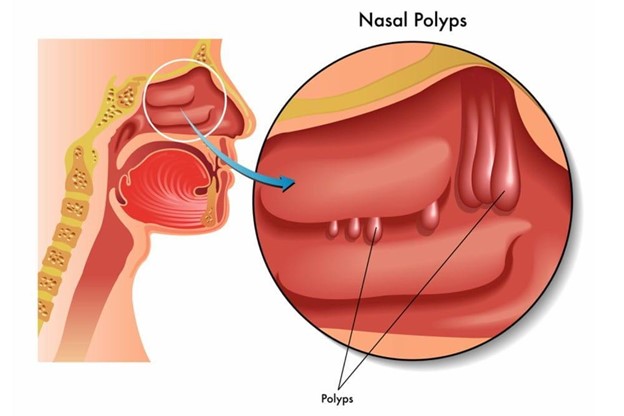
Sinus treatment for nasal polyps and recurring blockage
Nasal polyps are soft, non-cancerous growths that can block airflow and reduce smell. They often require more targeted treatment than “standard congestion care.
A sinus specialist may recommend:
- steroid nasal sprays (often central to polyp control)
- Saline rinses to reduce mucus and improve the delivery of medication
- additional medical treatment depending on severity
- nasal endoscopy and sometimes a CT scan to confirm the extent
If polyps are large or recurring, sinus surgery may be discussed as a way to improve airflow and drainage and help ongoing medical therapy work better.
Structural causes: when medication is not enough
Some people have chronic congestion mainly due to structure, such as:
- deviated septum
- enlarged turbinates
- narrowed nasal airflow pathways
Clues that structure may be a major factor:
- One side feels consistently blocked
- Symptoms worsen when lying down.
- minimal allergy symptoms, but airflow still feels restricted
- limited improvement despite correct medical treatment
An ENT clinic assessment can identify whether a structural issue is contributing and whether procedural options may be appropriate.
When to see an ENT specialist or sinus doctor in Singapore
Consider an ENT clinic appointment if:
- Congestion lasts more than 2–3 weeks with little improvement
- Symptoms recur frequently or feel “never-ending.”
You have facial pressure, post-nasal drip, or reduced smell.l - Congestion disrupts sleep (snoring, mouth breathing, fatigue)
- You have used multiple courses of treatment without lasting relief.
Seek urgent assessment if you have:
- swelling around the eyes, vision changes, or a severe headache
- high fever with worsening symptoms
- heavy nosebleeds or alarming one-sided symptoms

What to expect at an ENT clinic appointment
An ENT doctor will usually perform:
- a detailed symptom history (timeline, triggers, previous treatments)
- an examination of the nose, throat, and ears
- nasal endoscopy (a thin camera used to view deeper areas) when needed
- a CT scan when chronic sinusitis is suspected, or surgery is being considered
- allergy assessment when symptoms suggest an allergic cause
This process helps move you from trial-and-error treatment to a plan based on the real cause of your congestion.
When sinus surgery is considered
Sinus surgery is typically considered when:
- Symptoms persist despite appropriate medical treatment
- Nasal endoscopy or CT findings show blocked drainage pathways, polyps, or significant narrowing.
- The quality of life is significantly affected.
Modern sinus surgery is often endoscopic (through the nostrils). Your sinus surgeon should explain what surgery can improve, expected recovery, and the importance of ongoing care (especially if allergies or inflammation remain).
Key takeaway: a practical plan that works for many patients
For many people with chronic congestion, the most effective starting plan includes:
- daily saline rinses
- consistent, correctly used steroid nasal spray
- allergy management if symptoms point to allergic triggers
- avoiding prolonged use of decongestant sprays
- ENT review if symptoms persist, recur often, or affect smell/sleep
Chronic congestion can be frustrating, but it is often highly manageable once the cause is correctly identified and treated. For more relief tips for chronic sinus, check out this article https://betterthisworld.com/tips-tricks/ent-specialist-shares-relief-tips-for-chronic-sinus-and-ear-infections/
If your symptoms have been ongoing for weeks, or you are repeatedly stuck in the same cycle, consulting an ENT sinus specialist can be the step that finally brings clarity—and lasting relief.